Skip to content
Sabid Mahmud, home

Work

Featured work

Web applications, research software, and applied ML projects, with the decisions and evidence behind them.

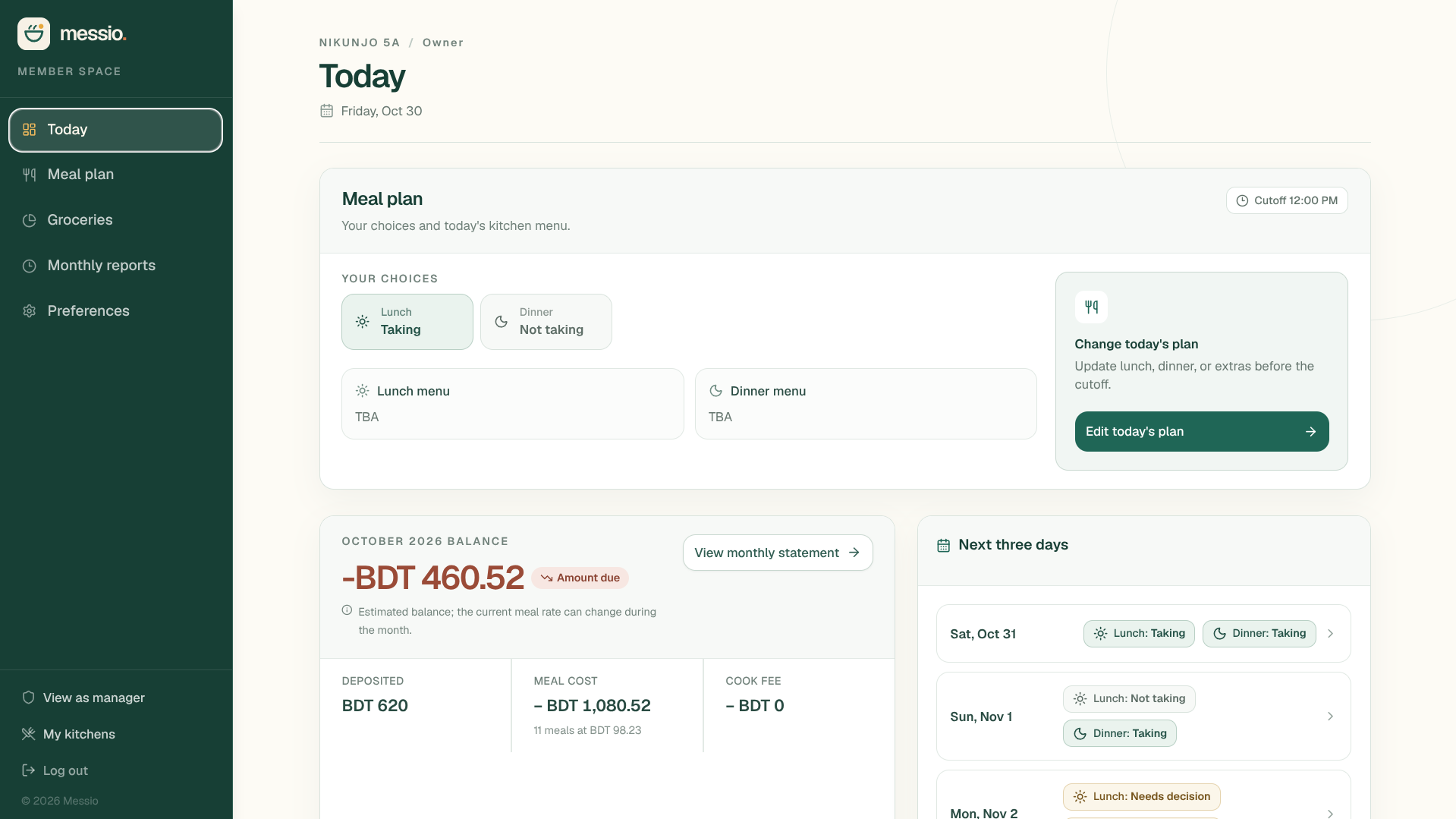
Messio member dashboard with daily meal choices, balance, and upcoming meal plans

Screenshot 1 of 7. Member dashboard

Full-stack product

Messio

A shared-kitchen application that turns meal records, deposits, and expenses into member balances and monthly statements.

My role · Design, development, deployment & maintenance (solo)

Started October 2025; in use since November 2025. Now used by 10+ people.

  • TypeScript
  • Next.js
  • MongoDB
Visit live app View project
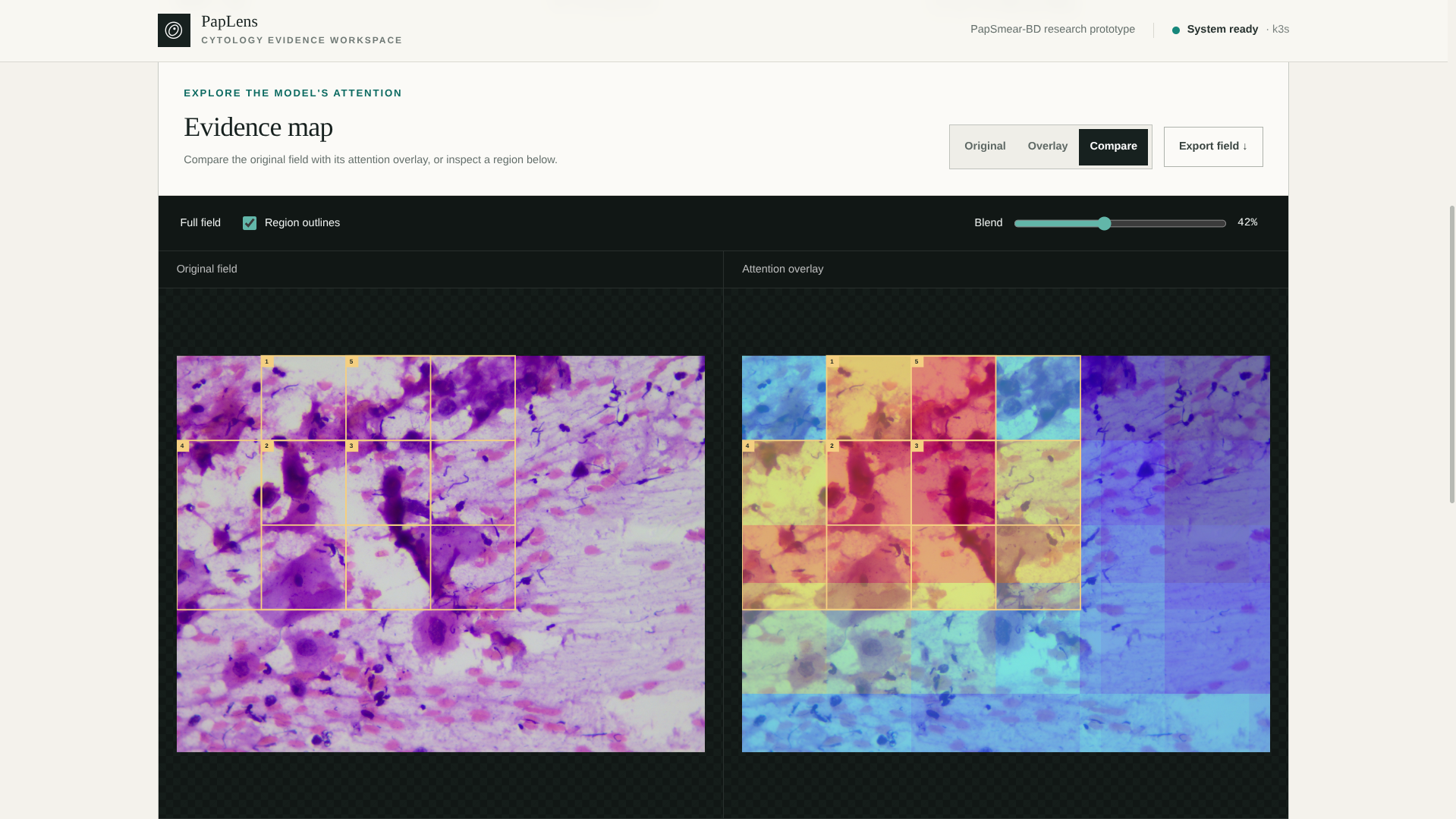
PapLens evidence map comparing the original microscopy field with the model's patch-attention overlay

Screenshot 1 of 4. Attention map comparison

Applied ML · Research prototype

PapLens

PapLens runs cervical-cytology deep learning models from our research and lets people inspect the resulting attention maps in the original field.

Research prototype. Not for clinical or diagnostic use.

My role · Inference service, web application & deployment (solo)

About 4 s average inference for a standard input image. Self-hosted on K3s with GitOps deployment through Flux CD.

  • PyTorch
  • FastAPI
  • Next.js
  • K3s
View project

Additional projects

Research tooling

VeraLabel

A self-hosted image-annotation platform with configurable project taxonomies, role-based workflows, blind annotation queues, and configurable consensus targets.

  • Next.js
  • MongoDB
  • Docker Compose
  • Nginx

License: MIT

Source code
Project highlights and details

Background

VeraLabel grew out of my undergraduate research on cervical cancer. Building a Pap-smear image dataset required collecting microscopic images and coordinating annotations from partner specialist doctors. I developed a portal where doctors could sign in, examine the images, and record their assessments.

The workflow supported independent review: several doctors could annotate the same image without seeing one another’s labels, allowing the research team to compare their assessments. I self-hosted the entire annotation workflow on my Kubernetes homelab, bringing the application and its supporting infrastructure into the research process.

I later generalized the portal into VeraLabel so other research teams could adapt it to their own image datasets. Configurable label taxonomies and consensus settings support different annotation workflows, while self-hosting lets teams choose where to run the application and store their images.

Highlights

  • Originated as a specialist-annotation portal hosted on my Kubernetes homelab for undergraduate thesis research.
  • Researchers define project-specific labels, colors, descriptions, and consensus thresholds.
  • Annotators receive pending images they have not already annotated in that project.
  • Admin, researcher, annotator, and reviewer roles separate platform and annotation workflows.
  • Nginx serves mounted image files directly, keeping large image delivery out of the Next.js request path.

Project details

VeraLabel is a self-hosted image annotation tool intended for research teams working with visual datasets, including medical imaging. Project settings store a custom label taxonomy and the number of annotations required for consensus.

The application uses Next.js API routes with MongoDB/Mongoose for project, image, user, and annotation data. Its Docker Compose stack runs the web app, database, and Nginx proxy together; image files are mounted into the Nginx service for direct serving.

The original portal supported annotation work for my undergraduate thesis on my Kubernetes homelab. VeraLabel extends that foundation into a configurable application that other research teams can self-host.

Blockchain · Academic project

HumanitarianEscrow DApp

A decentralized aid-mission prototype that models agency bids, donor-funded escrow, delivery approval, and dispute resolution through a Solidity contract and wallet-connected web app.

  • Solidity
  • Next.js
  • TypeScript
  • ethers.js
  • Truffle
  • Ganache
Source code
Project highlights and details

Background

HumanitarianEscrow explores how a blockchain application could make the funding lifecycle of a relief mission more visible. Donors post a mission with a category, region, and budget; relief agencies submit bids; and a donor can select a bid and fund the mission through the smart contract.

The project models the steps after funding as well: an agency marks a mission delivered, the donor approves or disputes it, and an arbiter resolves a dispute. The goal was to turn this multi-party process into explicit contract states and role-specific workflows rather than leave mission status and settlement as informal coordination.

Highlights

  • Solidity contract models donor, relief-agency, and arbiter roles with a mission lifecycle state machine.
  • Agencies bid against a mission budget; the donor selects a bid and funds the escrow.
  • Delivery approval releases the agency payout after a fee; disputed missions can be refunded or settled by the arbiter.
  • The web client reads contract state and events and uses MetaMask for wallet transactions.

Project details

The smart contract is written in Solidity, and the web client uses Next.js, React, TypeScript, and ethers.js. The repository documents local development with Truffle and Ganache, with a local chain used to exercise multiple roles and mission flows.

The contract includes bid eligibility and reputation rules, a fee calculation, and events used by the client to reconstruct mission activity. The frontend separates donor, relief-agency, and arbiter dashboards and reads state directly from the contract without an off-chain database.

This is an academic prototype, not a deployed aid-finance service. Blockchain transactions cannot independently verify that aid reached recipients: delivery evidence and dispute decisions still rely on human actors and real-world processes. The repository does not report a security audit or live operational use.